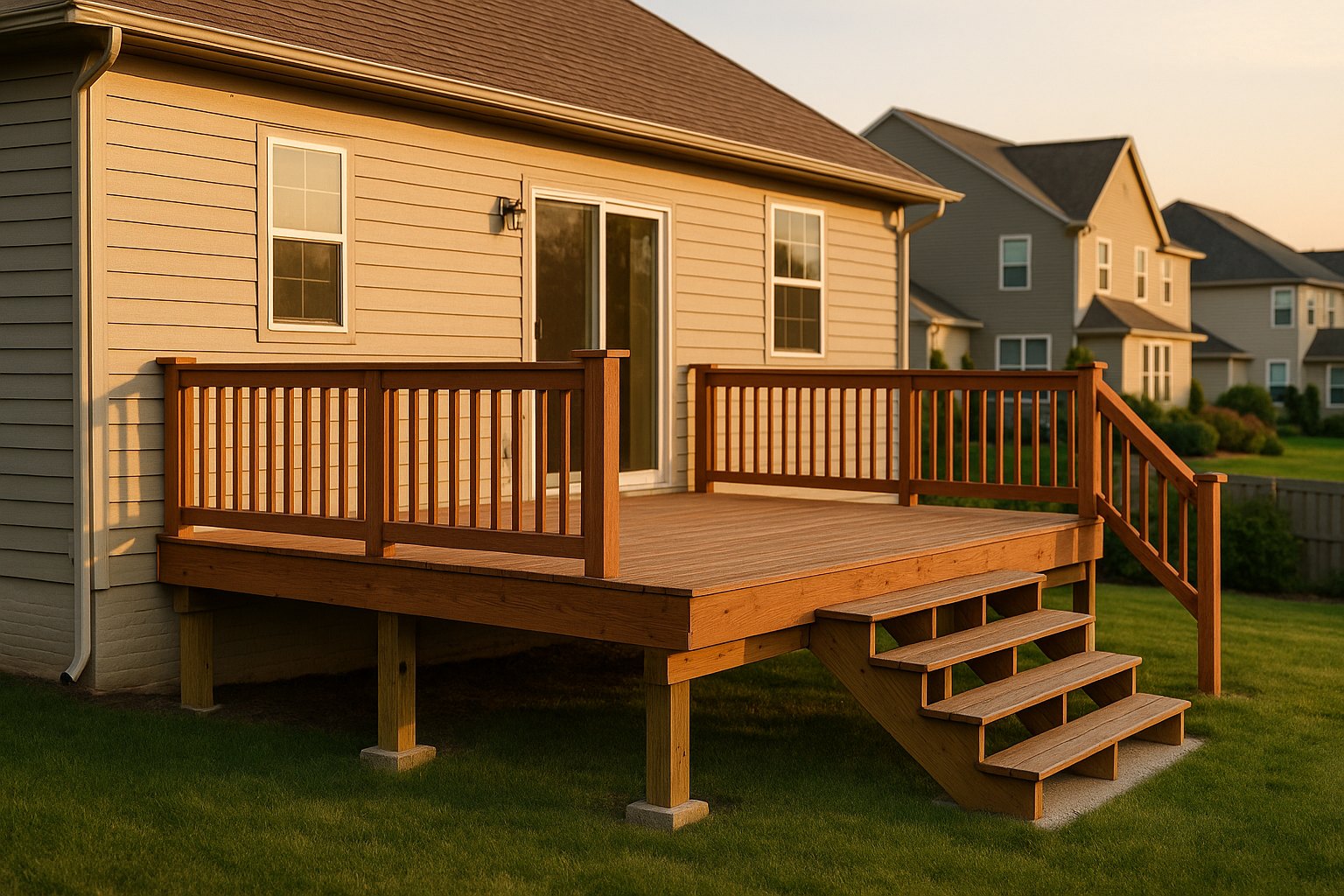
My neighbor Dave leaned on his deck railing last April and the whole corner wobbled like a loose tooth. He'd walked past it all winter, never thinking twice. But Indiana's freeze-thaw cycles had done a number on the post anchors. That's the thing about decks around here—they can look fine from ten feet away but hide some nasty surprises when you get close. So grab a flashlight, a screwdriver, and your phone for photos. Let's walk through what to check before the real outdoor season hits Westfield and the surrounding areas like Carmel, Fishers, Zionsville, Noblesville, Greenwood, Brownsburg, Avon, and Plainfield.
Start from the Ground Up: Footings & Posts
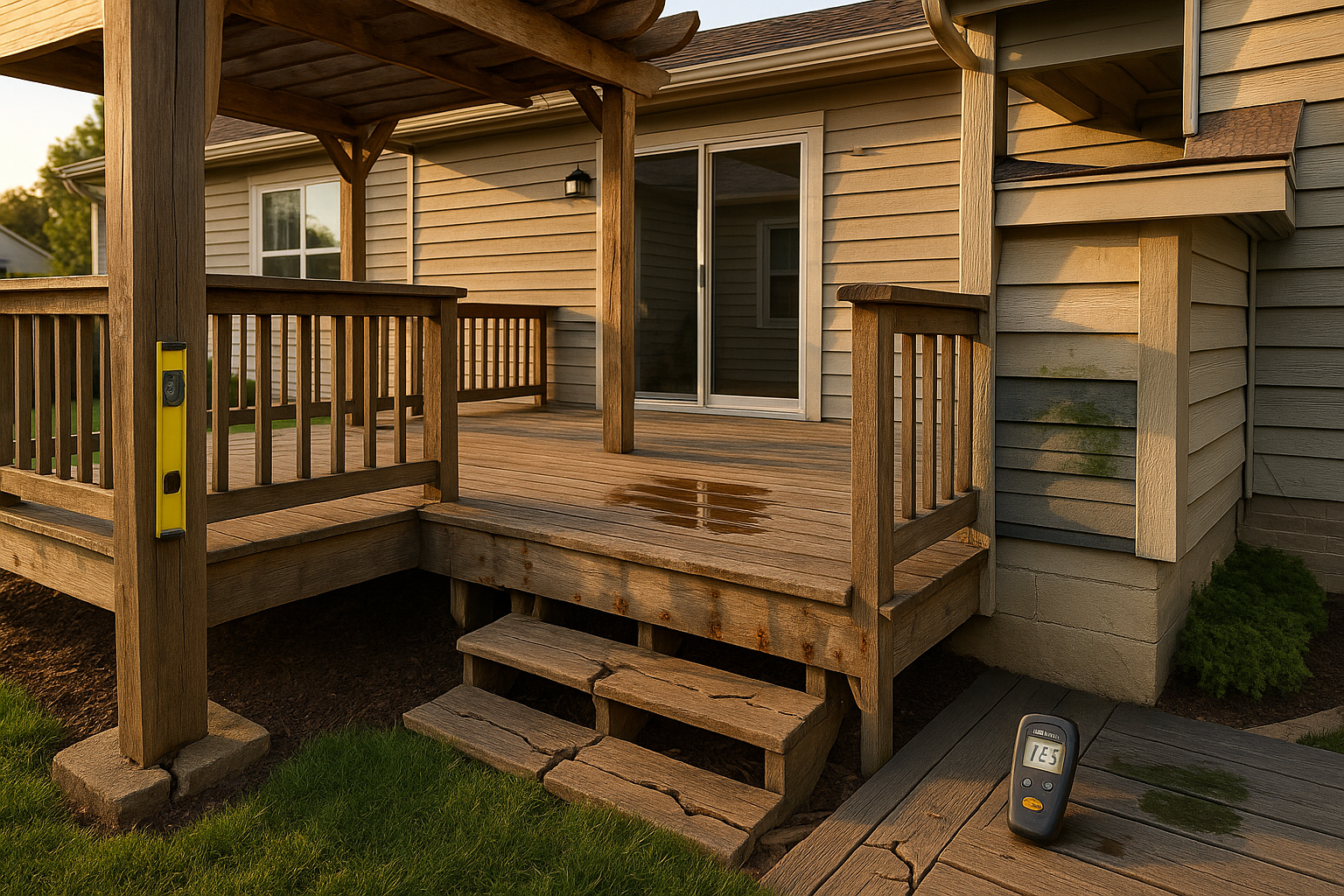
Frost heave is a big deal in Hamilton County. Our clay soil soaks up water, freezes, and pushes concrete out of the ground. Look at each post base. If the concrete pier cracked or lifted, even a half inch, that post isn't sitting square anymore. Tilted posts put stress on the whole frame. I've seen decks where the outer posts rose enough to separate the beam from the joists. Run a level along the posts and see if the deck slopes away from the house—it should, but only slightly. If there's standing water right at the base, that's a recipe for rot. Dig a little around posts set in dirt to check for underground decay. And if you're in a newer Westfield subdivision, those open lots get a lot of wind, so any wobble in the foundation gets amplified.
The Bones: Beams, Joists & Ledger Board
Underneath the deck is where a lot of serious issues hide. Take that flathead screwdriver and poke along beams and joists. If the wood feels soft or spongy, you've got rot, especially near notches or connections. Joist hangers should be tight and free of rust—de-icing salts from the driveway can eat metal fast. Now, the ledger board. That's the big one. It attaches the deck to your house. Water loves to sneak behind there if the flashing isn't right. Look for a continuous strip of metal tucked up under the siding, with no gaps or tears. I helped a guy in Glendale who swore his ledger was solid because the paint looked fine. We probed it and the screwdriver went in like butter. The lag bolts had rusted to toothpicks. If you see anything like that, stop and call a pro. This isn't a DIY fix unless you really know what you're doing. For a broader look at how materials handle our winters, check out our piece on best deck materials for Indiana winters.
Hardware Check: Fasteners & Hangers
Rusty nails backing out, corroded hangers, mismatched metals—these are all signs that winter took a toll. If you have a pressure-treated deck, the chemicals in the wood can react with cheap fasteners. For us in Indiana, salt from icy driveways gets tracked up and accelerates corrosion. Look for brown streaks coming from screws (that's rust bleeding into the wood) and replace any fasteners you can with outdoor-rated coated or stainless steel. A few loose screws on deck boards are annoying, but a failed joist hanger is a safety hazard. Give hangers a wiggle with a wrench; if they move, the connection isn't secure.
Decking Surface & Drainage
Walk every board. Feel for springiness or popping screws. On wood decks, look for cracks, splits, or boards that cupped and now hold water. On composite or PVC decks, you might not see rot, but the structure underneath can still fail, so don't skip the underside inspection. One myth I hear all the time: "It's composite, I don't need to do anything." Not true. Composite can get slick with algae buildup on the shady side, especially after a wet spring. Check the gaps between boards—they need to be open at least ⅛ inch so water drains. Clogged gaps mean water pools and runs toward the house. Sweep out the leaves and dirt that built up. If you see black or green patches, it's mold and mildew. A gentle wash now saves you a slip-and-fall later. For more on different materials, our comparison of Trex and TimberTech composite decks has some good insight.
Railings & Stairs: The Safety Net
This is what Dave messed up. Push on the railing from the top—not just a little lean, but a solid shove. If it moves at all, something's loose. Look at how the posts anchor to the deck frame. In Indiana, code says railings need to hold up to 200 pounds of lateral force. That usually means blocked posts or special connectors, not just a few screws toe-nailed into the decking. Over time, freeze-thaw can widen screw holes and loosen everything. On stairs, check stringers for splits and treads for wear. Make sure riser heights are the same—more than a ⅜-inch difference is a trip hazard. Handrails should be graspable and continuous. If you're in a Westfield HOA, they might have style rules, but safety trumps style. Fix wobbly rails before someone gets hurt. Actually, a lot of folks don't realize that a railing contractor can upgrade just the rail system without rebuilding the whole deck, especially if you want something stronger or to modernize the look.
When Your Deck Meets the Fence
In lots of backyards around here, the deck flows right into a fence, like privacy screens or attached gates. Winter can push fence posts out of plumb too, and if that fence ties into your deck post, the whole thing can get twisted. Check where any fencing connects—look for split wood, rusted brackets, or sagging gates. Sometimes the fence contractor who originally set those posts didn't use enough concrete, and freeze-thaw cycles expose the footings. If the deck railing doubles as a fence support, even more reason to get those connections rock-solid.
Covered Areas & Patio Enclosures
If you've got a pergola, sunshade, or a patio enclosure attached to the deck, the spring inspection should include those. Wind and snow load can stretch connectors or pull fasteners out of the roof structure. Check upright posts for splits at the base, especially if they sit right on the deck boards without standoff hardware. A patio enclosure supplier will tell you that the flashing where the roof meets the house is just as critical as the deck ledger—any gap lets water behind the siding. Even those fabric shade sails need a hard look; if the anchor points are pulling out, you'll have a big tear in the first storm.
Pests, Rot & Mulch – The Silent Threats
Take a minute to look for carpenter bee holes. They're those perfectly round ½-inch bores that go in and then turn 90 degrees, chewing long tunnels. If you see fresh sawdust or bee activity, treat them before it gets worse. Also check for mud tubes from termites or trails of carpenter ants. And here's a simple mistake: mulch or planters piled against the deck skirting. That holds moisture against the wood and invites rot. Pull mulch back at least a few inches. I've seen entire rim joists rotted because the homeowner wanted flower beds right up against the deck.
Prioritize & Plan: From Safety to Cosmetics
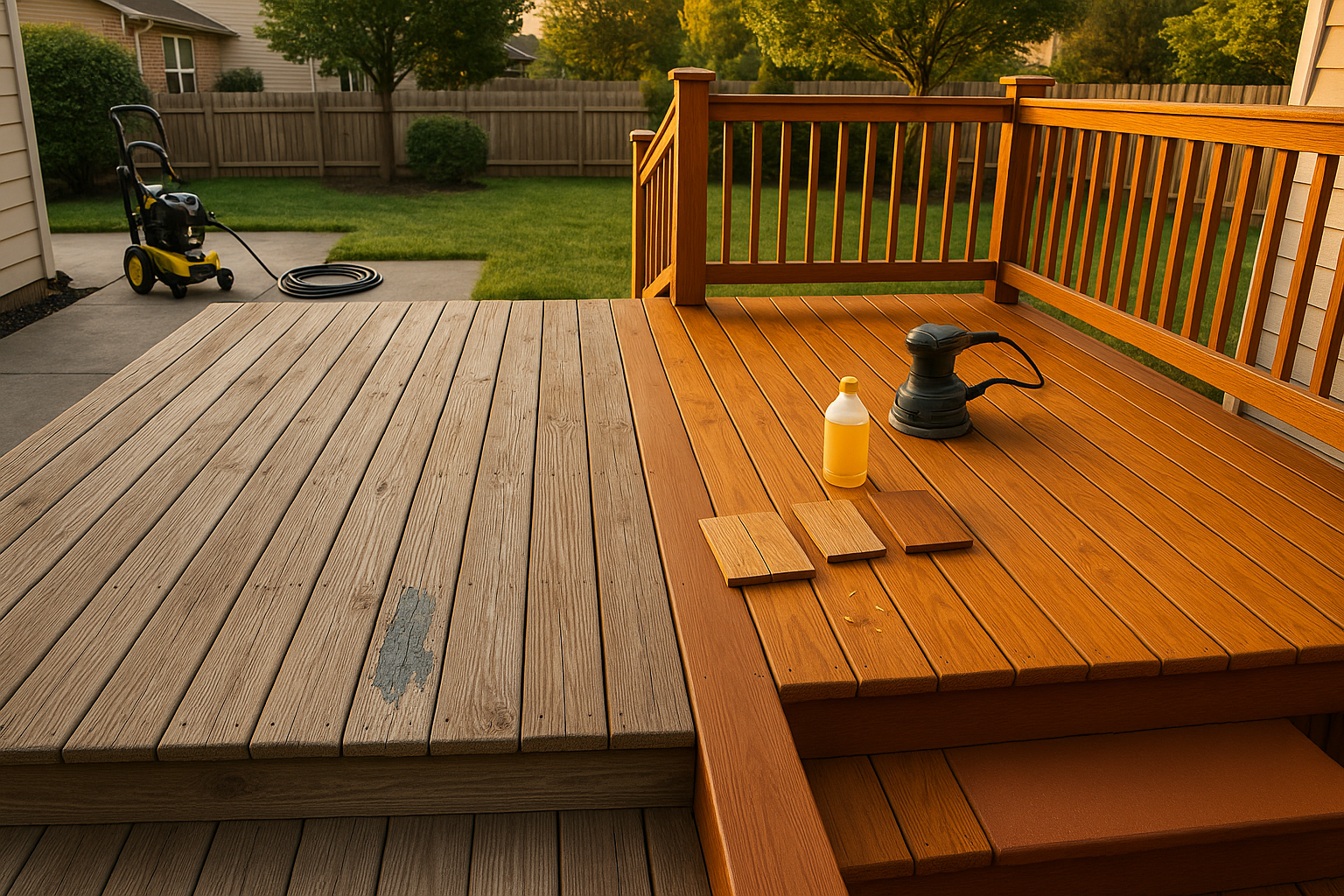
When you're done looking, you'll probably have a list. Fix safety stuff first: loose railings, ledger trouble, rotten stairs, electrical issues (test those GFCI outlets while you're at it). Next, structural things like cracked joists or heaved posts. Last, cosmetic: cleaning and resealing. For pressure-treated wood in Indiana, you want it dry enough—usually by late April or May—before applying stain. A moisture meter helps; you're aiming for 12% or less. If you're selling your home soon, a buyer's inspector will spot these problems, so fixing them now avoids a last-minute panic. A little planning now saves a lot of stress. Our deck maintenance schedule guide lays out a good year-round rhythm.
When to Call a Pro (And How to Avoid the Upsell)
I get why people hesitate. You think a contractor will come in and tell you the whole deck's shot and you need a $30,000 rebuild. That's not how we work. If you see ledger sagging, major rot, footings that have moved, or you're just not sure about code, call someone who knows Westfield's local amendments. A real pro will give you a prioritized list, not a hard sell. At DeckPros, we show up, talk through what we see, and you decide how much you want to tackle. No pressure. If you're in Westfield, Carmel, Zionsville, or anywhere around Indy, grab a no-pressure inspection here. It's the fastest way to know what's urgent and what can wait.
A Spring Maintenance Calendar for Indy Homeowners
Timing in Indiana means working between rain showers. Late March to early April: inspect. Mid-April: make structural repairs while the weather's cool. Late April into May: clean and seal once the wood dries out. May into June: upgrade lighting, add a privacy screen, or stain the railings a new color. By the time the pool's open, you'll be sitting pretty. And if you're one of those people who says, "I'll wait until summer," remember that decks don't heal themselves—they just get more expensive the longer you ignore them.
Thinking about your own deck or pergola?
Free in-home design consultation, 3D rendering, and a written quote — no pressure.