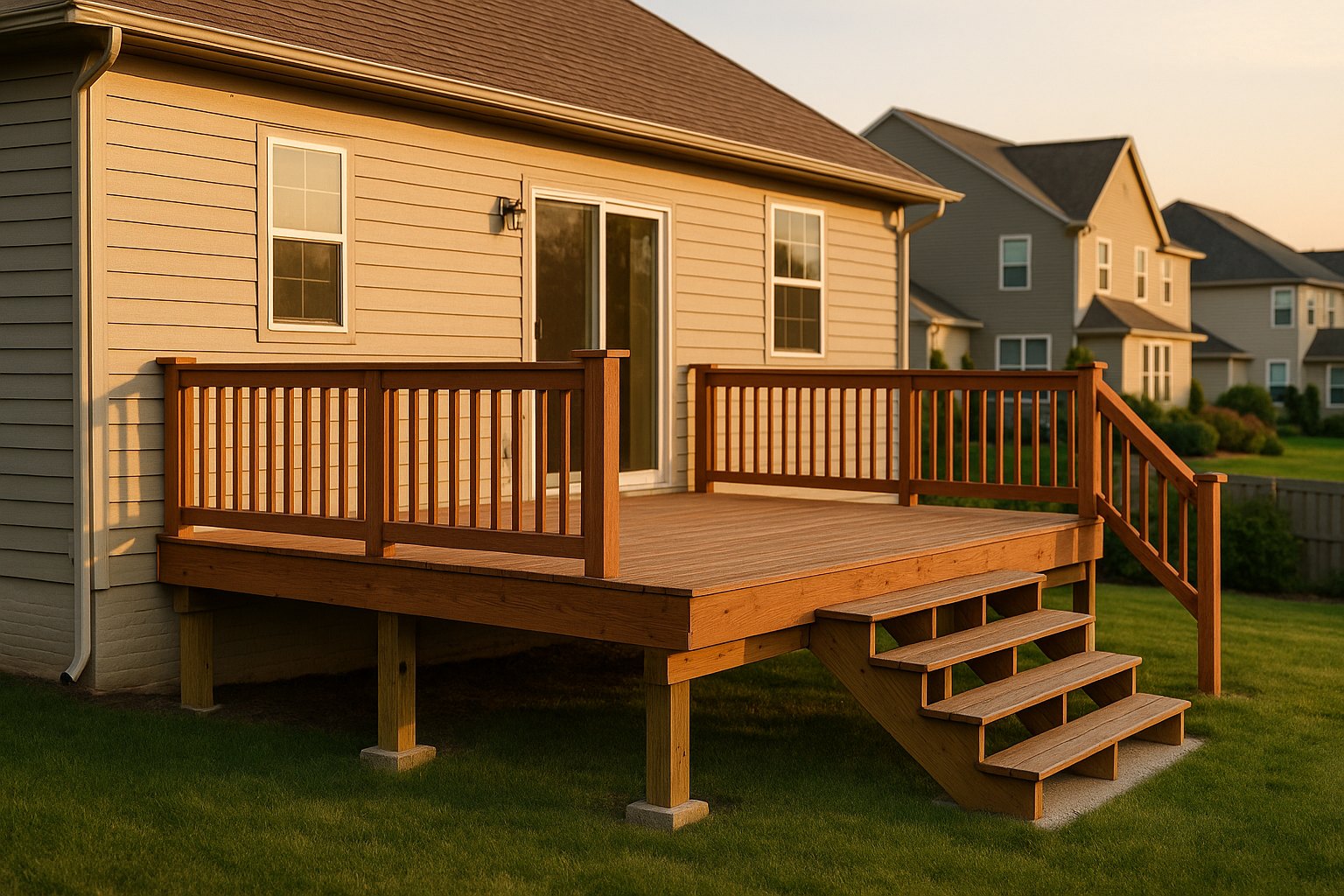
My neighbor Tim built a gorgeous cedar deck the first spring he moved to his place in Zionsville. By the following February, he was out there with a putty knife trying to chip ice dams off the ledger board, muttering about “that cheap big-box lumber” like it was a personal betrayal. The boards were cupped, the fasteners had popped up, and the once-warm wood tone had gone gray and splotchy. Tim’s not an idiot—he’d just never had a deck in a climate that goes from 45 and rainy to 12 and icy in the same afternoon. And that’s pretty much every winter in central Indiana.
If you’re replacing or building a new deck around here, the material you pick is going to spend a lot of time wet, frozen, thawing, and re-freezing. That cycle chews up bad products fast. But the right stuff, installed with local know-how, can take it for decades. At DeckPros, we’ve fixed enough winter-wrecked decks from Broad Ripple to Brownsburg to know what holds up and what doesn’t. Here’s how to choose deck boards, fasteners, and framing that won’t make you curse your luck next February.
So, What Winter Actually Does to a Deck Around Indy
Freeze-thaw isn’t just some builder buzzword. Water gets into tiny cracks and pores in your decking, then expands when it freezes. That wedges boards apart, loosens fasteners, and makes even small checks turn into big splits. Central Indiana’s heavy clay soil makes it worse: it holds moisture against posts and footings, and when it freezes, it can heave anything that isn’t anchored deep enough. Throw in snow that sits in shaded spots—think backyards in Carmel with those big old maples—and you’ve got a perfect recipe for rot and warping.
The deck surface also has to handle snow load, salt from your boots, and the occasional impulse to drag a metal shovel across it. Plus, if your deck faces an open field or a cul-de-sac in Plainfield, wind can whip snow into drifts that hang around for days. That’s why slip resistance, stain resistance, and simple maintenance matter just as much as a material’s strength.
The Main Contenders: Which Decking Survives Freeze-Thaw?
Capped Composite
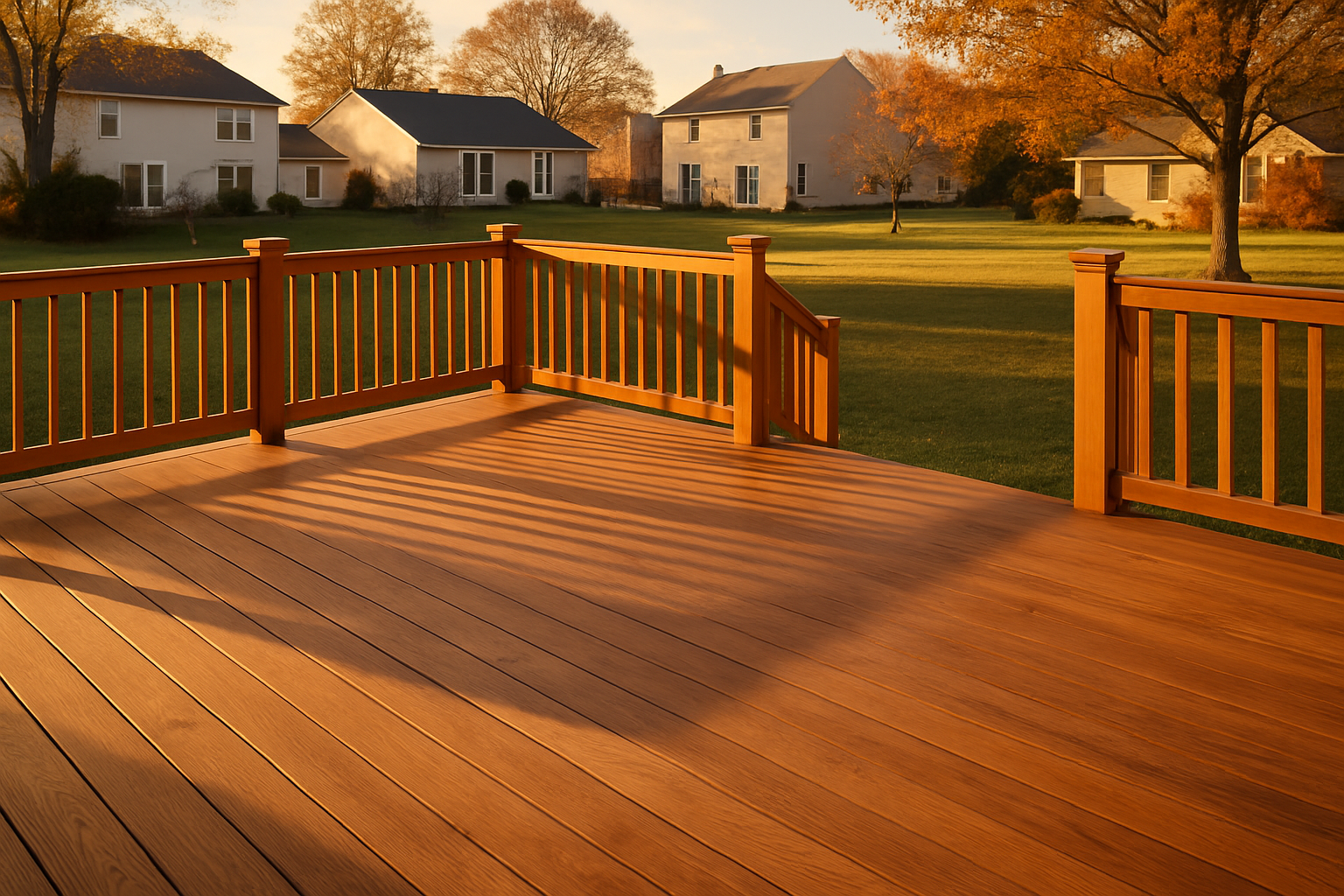
This is the heavy hitter for Central Indiana. Capped composite—think Trex Transcend or TimberTech’s capped lines—has a wood-plastic core wrapped in a polymer shell. That shell shrugs off moisture almost completely, so freeze-thaw can’t do much damage. It won’t splinter, and you’re not stuck sealing it every fall. Most good composites have embossed grain patterns that give you decent grip underfoot, even with a little frost. Lighter colors show less salt staining, though darker boards do melt snow a bit faster. One tip: don’t cheap out on no-name brands. We’ve seen caps separate from the core after a couple of hard winters. Stick with major names that test for cold climates—our Trex vs. TimberTech breakdown over in Avon lays out which lines handle temperature swings best.
PVC (All-Plastic) Decking
PVC boards are 100% plastic, so they absorb zero moisture—great for winter wetness. They’re also lighter and often have a textured surface that stays grippy. The knock? In sub-freezing temperatures, PVC can feel a touch stiffer and may expand and contract more than composite, so you’ve got to get the gapping right. A buddy in Noblesville went PVC on a south-facing deck and loves how it sheds snowmelt, but he notices it’s a little louder under his dog’s nails when it’s 10 degrees out. That’s not a deal-breaker, just a quirk. If you go PVC, make sure the brand specifies cold-weather performance, and use their recommended hidden fasteners with the correct spacing.
Pressure-Treated Southern Yellow Pine
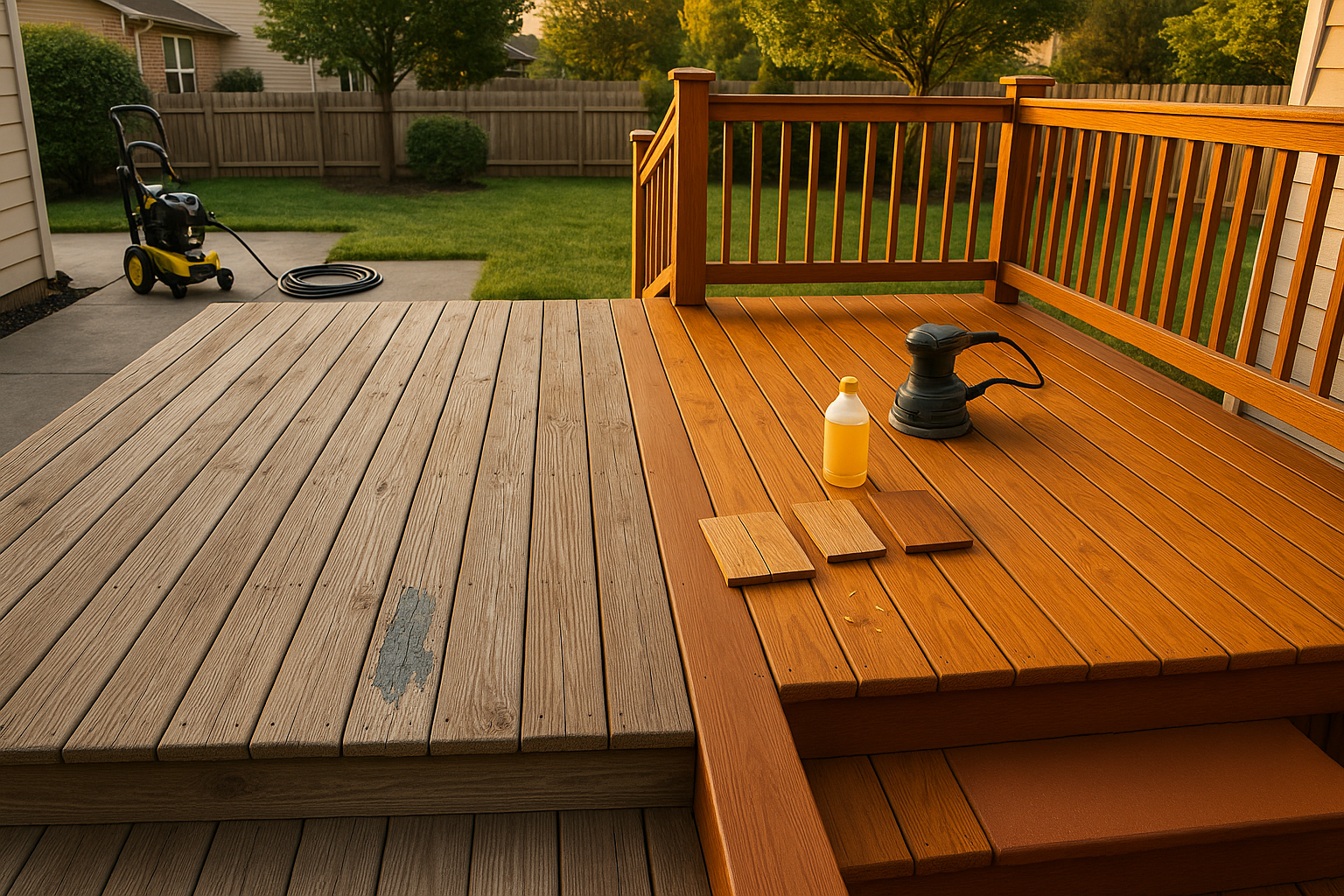
Old reliable, and the most wallet-friendly option up front. Treated pine is chemically infused to resist rot, and ground-contact-rated boards are a must if your deck is low to the ground (common in older Greenwood or Beech Grove homes). But winter isn’t kind: the wood moves, checks, and soaks up moisture unless you keep up with a penetrating oil finish. Every couple of years, really. Salt and de-icers stain it worse than they do composites. If you don’t mind that weathered look and you’re the type who actually follows a maintenance schedule—we’ve got a handy one for Fishers homeowners here—treated lumber can work. Just don’t expect it to look pristine without effort.
Cedar
Cedar is pretty and naturally rot-resistant, but it’s soft. Shoveling a cedar deck in February can leave gouges if you’re not careful. It also needs consistent sealing to handle Indiana’s moisture swings. I’ve seen cedar decks in Westfield that look amazing for five years, but only because the owners are religious about cleaning and re-sealing twice a year. If you love the look and you’re okay with the maintenance, go for it—but know that a single winter of neglect starts the gray, fuzzy decline.
Hardwoods Like Ipe
Ipe is a beast: incredibly dense, naturally oily, and nearly impervious to rot. It handles freeze-thaw like a champ. The catch? It’s expensive, tough on tools, and you really should pre-drill every fastener hole. Because it’s so dense, water doesn’t get in easily, so it won’t crack the way pine does. But you’ll want hidden fasteners or stainless screws, and end-grain sealing on every cut. In an upscale Carmel neighborhood where the HOA wants a “rich wood tone,” ipe can be the lifetime choice. Just know you’re paying for that durability up front.
Don’t Forget the Frame and Footings
The best deck board in the world won’t save you if the frame beneath it is rotting or heaving. Around Indianapolis, the frost line is generally 36 inches—check with your city, because some spots in Hamilton County require slightly more. If your footings aren’t below that, they’ll move. We’ve used helical piers in tricky clay soil in Brownsburg where traditional concrete just wasn’t cooperating. And a solid ledger attachment against the house, with good metal flashing and a self-adhered membrane, stops water from sneaking behind the siding and freezing. That’s often where a deck fails first, not on the surface. As a licensed contractor, we handle all that structural stuff so you’re not playing detective with building codes.
Stainless Steel Fasteners and Joist Tape: Cheap Insurance
Nails pop. Plain steel screws rust. For any deck material you choose, spend the extra on stainless steel or coated fasteners rated for treated lumber and composites. Hidden fastener systems (the clips that go between grooved boards) work great with composites and PVC—they let the boards move a little with temperature swings without pulling up. And always put joist tape on top of the framing. That butyl tape seals around screw penetrations and keeps water from rotting the top of your joists. It’s a $50 upgrade that adds years to your deck, especially where meltwater drips between boards for weeks on end.
Railing That Won’t Slick Up
A deck railing isn’t just for looks. In winter, it’s what you grab when the boards are icy. Aluminum railings with a textured powder coat don’t get as slick as wood or smooth vinyl when frost settles in. Black railings are popular, but they contrast well with snow for visibility. We’ve worked with plenty of homeowners in Noblesville who wanted a specific spindle pattern to match a fence they already have—and that’s where a good fence contractor and deck builder being on the same page matters. If you’re adding a new fence around your yard, coordinating the materials and styles makes the whole outdoor space feel intentional, not cobbled together.
Winter Maintenance: Little Things That Prevent Big Problems
Shoveling and De-Icing
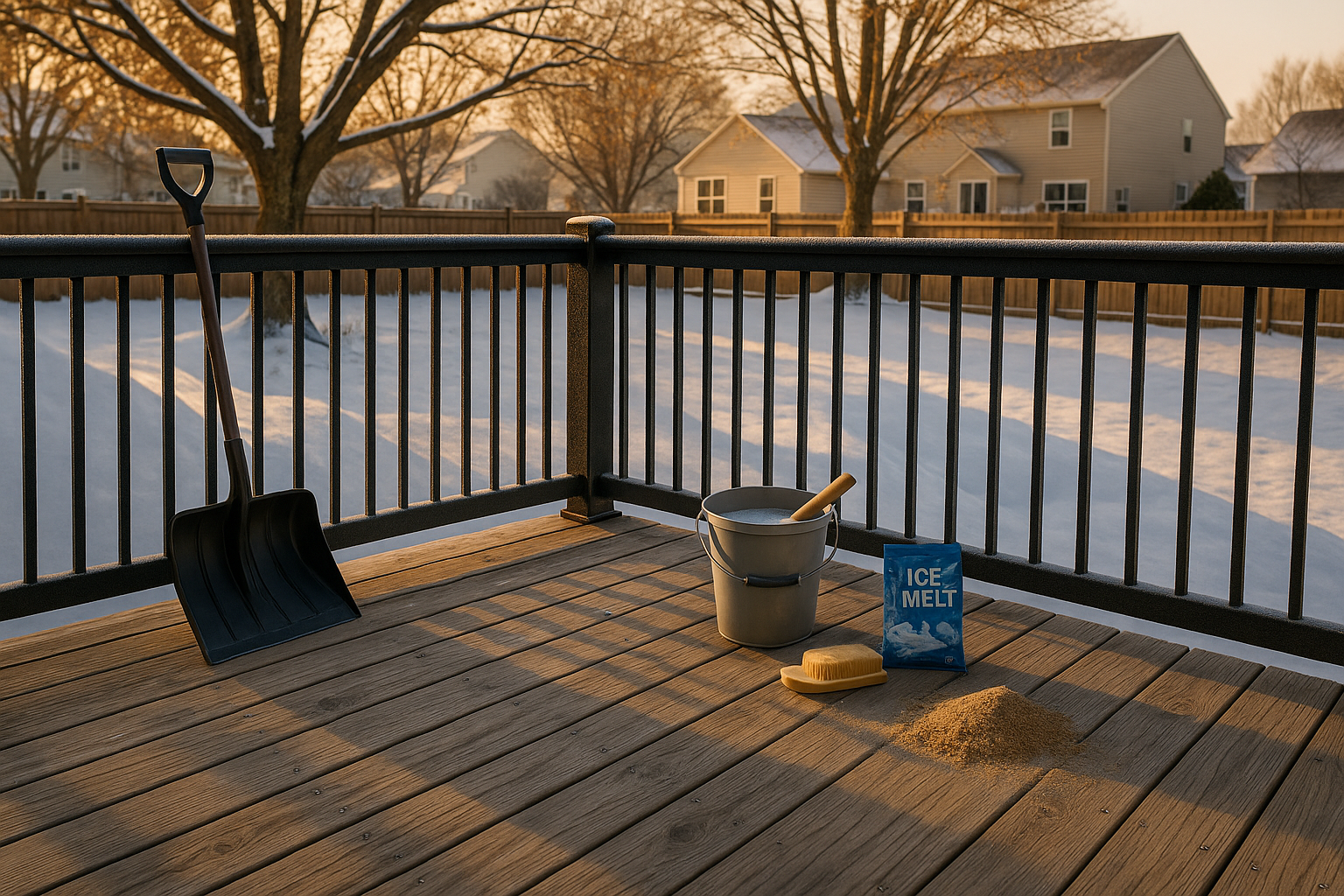
Use a plastic snow shovel with a wide edge. Metal shovels can gouge even composite. For ice, avoid rock salt—it can discolor wood and some composites. Most composite and PVC manufacturers say calcium-based ice melt is okay in small amounts, but always check your warranty and rinse the deck afterward. My own rule? I’d rather use sand for traction than any chemical at all. And if you do get salt stains, a mild soap and water scrub usually does the trick.
The “Should I Enclose Part of It?” Question
If you hate the idea of shoveling a deck at all, a screened porch or patio enclosure might be worth thinking about. We’ve done a few projects where we built a deck off the back of a Greenwood home and later turned one section into a three-season room. The deck base was already stout (frost-footings, treated frame), so adding walls and a roof was straightforward. That’s an area where a patio enclosure supplier comes in—they’ll help you decide whether to screen, glass-in, or mix both. Even a partial cover keeps most snow off and gives you a dry spot to grill all winter.
Making the Call for Your Indianapolis Home
There’s no single “best” deck material for everyone. If you want nearly zero maintenance and great freeze-thaw resistance, capped composite is hard to beat. If you want to save money upfront and don’t mind a little seasonal work, pressure-treated pine can do the job—especially if you’re already on a regular deck care schedule (we wrote about winterizing a wood deck here). PVC shines where maximum moisture resistance matters, like a shaded yard near a creek. And hardwoods like ipe are overkill for most folks, but if you’ve got the budget and love the look, they’ll last.
But here’s the thing: your specific yard, your township’s code, your neighbor’s fence line, and even your home’s roof runoff all change what makes sense. We’ve seen a deck in Avon that’s perfect in composite on one side of the street and a cedar deck on the other side that’s rotting because a gutter pours right onto it. Local details matter.
If you’re ready to stop worrying and start planning, give us a shout. DeckPros works all around the Indy metro—Carmel, Fishers, Zionsville, Plainfield, you name it. We’ll walk your yard, talk through materials that fit your budget and your winter worries, and put together a clear, line-item estimate. No sales pitch, just straight talk from a local deck builder who gets Indiana winters. Grab a quick quote and we’ll come by when it works for you—yes, we even build in the cold months.
Thinking about your own deck or pergola?
Free in-home design consultation, 3D rendering, and a written quote — no pressure.