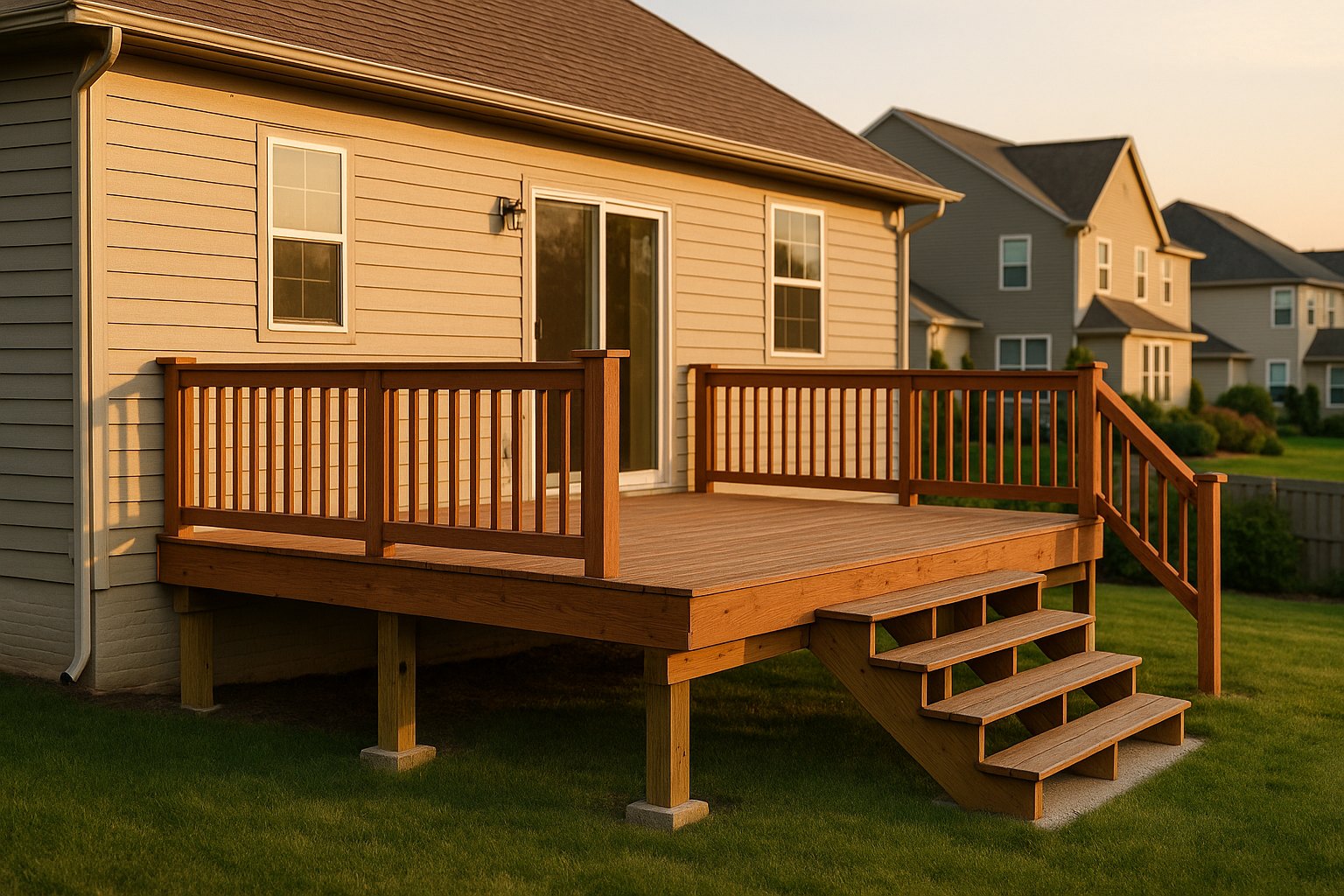
A couple years back, my neighbor Steve in Fishers called me over, half embarrassed. He’d been ignoring his deck—just a quick sweep now and then—and one day his foot almost went through a board while grilling. Turned out, years of wet leaves trapped between the boards and zero inspections had rotted the joists underneath. The fix cost him three times what a simple maintenance visit would’ve. And around here, that’s a story I hear way too often.
See, central Indiana’s weather doesn’t play nice with decks. We get those humid summers, a pollen season that leaves a yellow film on everything, and then a freeze–thaw cycle that works fasteners loose like a slow-motion pry bar. A generic online checklist won’t cut it—you need a deck maintenance schedule Indiana-style, built for our specific punch of moisture, UV, and temperature swings. That’s what we’re walking through today.
Why Your Deck Needs a Local Schedule
Up in Hamilton County, we’re not just dealing with rain. Those heavy dews near Geist Reservoir keep wood damp longer, and the maple trees that make neighborhoods like Sunblest or Sand Creek so pretty drop enough leaves to smother deck gaps all autumn. Add in a winter where the ground heaves and settles every few weeks, and you’ve got a recipe for popped screws, cupped boards, and algae that turns your deck into a slip-and-slide. A generic “clean your deck once a year” tip doesn’t factor that in.
I remember a family in Zionsville whose cedar deck started looking dingy after just one winter. They’d sealed it right, but they didn’t trim back the hydrangeas that kept the boards damp. That little bit of trapped moisture bred mildew, and by spring the deck felt like a sponge. The fix was simple—airflow and a good cleaning—but they didn’t know until a pro took a look.
Your Season-by-Season Deck Maintenance Plan
Early Spring – Inspection and Deep Clean
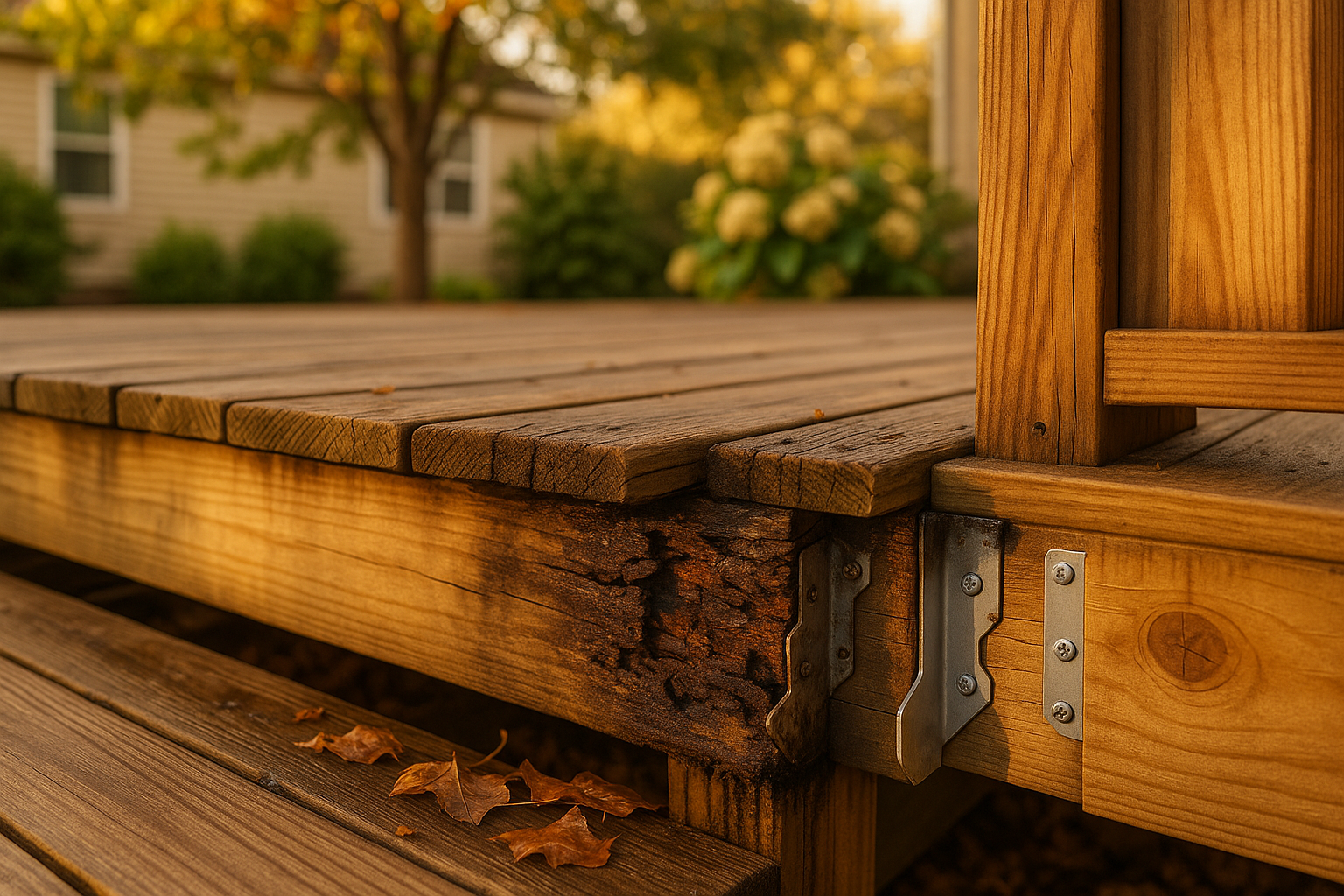
Once the ice melts and the robins show up, it’s time to really look at your deck. I tell people: get under it if you can. Check the ledger board—that’s the one attached to the house—for any water stains or rusted flashing. If that connection fails, you’ve got a much bigger problem than a wobbly railing. Look at the joists and posts for rot or termite trails (yes, we have those too). Grab a screwdriver and poke any suspect spots. If it sinks in like a damp sponge, call someone.
Topside, check every railing. As a railing contractor, I’m always stunned by how many decks have loose posts hidden by a flower pot. Give them a good shake. If they move, the fasteners might need replacing, or the wood might be soft. Also test your outdoor outlets and lights—GFCI tripping means moisture is getting where it shouldn’t.
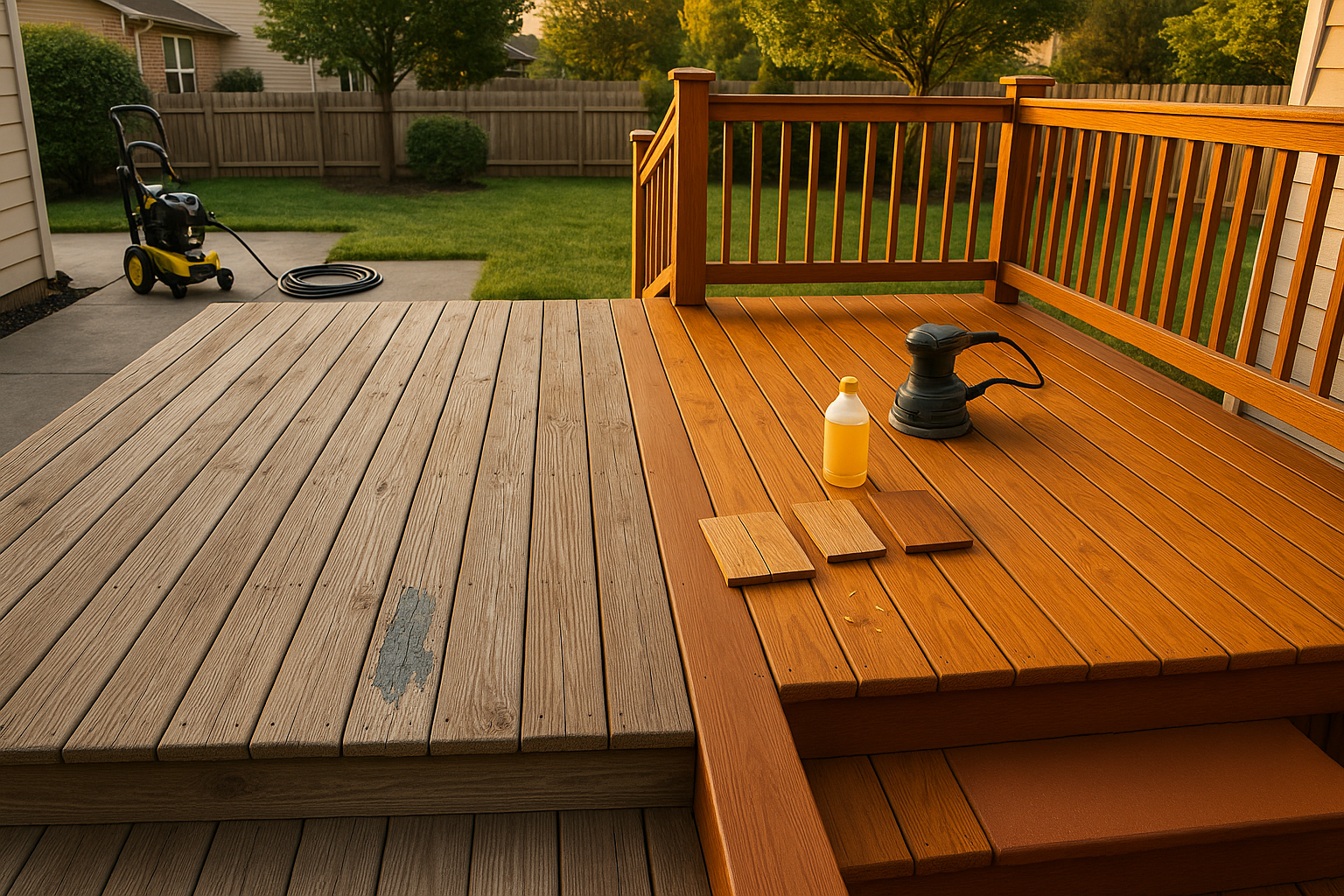
Cleaning depends on what your deck’s made of. For composite, a soft brush and a hose-down is usually enough—use a cleaner your brand recommends. For wood, skip the bleach. A non-chlorine oxygenated cleaner with a gentle scrub brightens without damaging the fibers. And please, resist the urge to pressure-wash on high. I’ve seen a guy in Noblesville turn his pine deck into a fuzzy mess because he held the nozzle too close. Low pressure, wide fan, no closer than a foot.
Late Spring – Stain or Seal (for Wood Decks)
Once the pollen settles and temperatures hover between 50 and 85°F—usually late May into June—it’s the sweet spot for finishing wood decks. Too hot and the sealer dries before it soaks in; too cool and it won’t cure right. I aim for a dry, cloudy day with moderate humidity.
How often? Pressure-treated pine generally needs a refresh every 2–3 years. Cedar, being softer, might need attention every 1–2 years, especially if you’re in a shaded lot over in Carmel. Pick a penetrating, UV-resistant sealer or stain, not just a surface film. And don’t fall for the cheapest can—those tend to peel within months. Check out our thoughts on cedar deck pros and cons if you’re weighing material options.
Summer – UV and Hardware Watch
Summer is for enjoying the deck, not babying it, but a quick monthly once-over helps. Look for lifted screws or nails—those freeze cycles push them up. Pounding a nail back down might work for a season, but a better fix is swapping in exterior-grade screws or stainless fasteners. Pay attention to joist hangers and connectors too; if they’re rusty or loose, your deck’s structure is relying on hope.
Heat and sun are brutal on finishes, so keep an eye out for fading or cracking. For composite decks, the sun can make the surface hot and fade color over time. No sealer needed—just give it a rinse and a soft scrub when it starts looking dull. If you’re dealing with algae or that slick green film in shady corners, treat it early. Mix a splash of white vinegar with water, scrub, and rinse. Trim back bushes so air can move. Over by Geist, I see a lot of algae because those lake breezes keep things damp.
Also, if your deck’s connected to a fence—say a privacy fence that frames the yard—check those shared posts. As a fence contractor, we often find rot spreading from the deck to the fence or vice versa. A quick look saves you a two-for-one repair down the road.
Fall – Prep for Leaves and Moisture
When the maples turn, get serious about sweeping. Those leaves are pretty until they decompose into a brown sludge that stains wood and clogs composite grooves. I keep a leaf blower on low and a soft-bristle broom handy. Clear the gaps between boards, and if you can, get underneath. Clogged under-deck spaces trap moisture all winter.
Check your downspouts. If they dump water near the deck, extend them or add a splash block. A friend in Westfield had his gutter pouring right onto a deck corner, and by spring that post was toast. Redirecting cost him twenty bucks and an afternoon.
Now’s also the time to think about your patio enclosure if you’ve got one. Screened porches often attach to the deck, and leaves pile up in corners where the screen meets the floor. We supply and install patio enclosures, so we know how to weatherproof those connections. A quick clean and silicone bead around the frame keeps cold air and moisture out.
Winter – Snow and Ice, the Right Way
Snow on a deck is fine—within reason. A foot or two of heavy, wet snow can stress the structure, so shoveling is smart. But use a plastic shovel, never metal, and push parallel to the boards so you don’t catch the edges. Never chop ice. If you must melt something, skip the rock salt and chloride de-icers. They eat through finishes and corrode fasteners. Sand gives traction; calcium magnesium acetate is a safer melt option. For more winter wisdom, head over to our guide on winterizing a wood deck.
When DIY Just Isn’t Enough
Some things you can’t brush off. If you’ve got soft spots that flex when you walk, a ledger board pulling away from the house, or widespread rust on connectors, stop and call a pro. The same goes for railings that sway with a nudge—especially on a second-story deck. As a licensed contractor, I’ve seen too many close calls. Recurrent algae might mean the wood never dries out—maybe you need better airflow or a drainage fix. Peeling finishes after a fresh coat? That points to moisture trapped in the wood or a bad product choice.
We had a homeowner in Brownsburg who kept oiling his deck every spring, but the boards felt spongy. Turned out, joists were sitting in wet soil underneath. A maintenance visit caught it, and we fixed the grading before it spread. No amount of surface treatment would have solved that.
DeckPros: Your Local Maintenance Partner
Look, I get that life’s busy. Between soccer practice and weekend errands, finding time to crawl under a deck isn’t high on the list. That’s where we come in. Our maintenance visits start with a documented inspection—we check everything from the ledger to the last baluster. We clean, tighten fasteners, and give you a straightforward plan: what needs doing now, what can wait, and what it’ll cost. No scare tactics, no upsells. Just a written scope so you know exactly what’s up.
If you’re in Fishers, Carmel, Westfield, Noblesville, or anywhere around Indy, we know your neighborhood’s specific quirks—the heavy dews, the HOA stain-color rules, the pollen that coats everything by mid-May. You can grab a quote or schedule a check-up right here. We’ll walk through it together, so your deck’s ready for every season, and you’re not the one telling the next Steve story.
And if your fence or patio enclosure needs love too? We’ve got you covered there as well. Let’s keep your whole outdoor space solid.
Thinking about your own deck or pergola?
Free in-home design consultation, 3D rendering, and a written quote — no pressure.