Last fall, I sat at a kitchen table in Carmel’s Village of WestClay with a couple staring at Zillow printouts. They wanted a deck bad—morning coffee, sunset hangs—but the husband kept circling resale numbers. “Will we ever see this twenty grand again?” he asked. We see this all the time. So let’s cut through the noise. Here’s what deck return on investment home value Indiana actually looks like, and how to make yours count.
The Real Meaning of Deck “Value”
It’s not just about what you get back at closing. Think three buckets. First, there’s the appraisal bump—what a professional writes down on paper when you refinance or sell. Second, the buyer appeal—what makes someone fall in love with your house and overlook that outdated bathroom. Third, the everyday value—sipping lemonade on a Saturday with your feet up. All three matter, but for ROI talk, we’re mostly eyeing buckets one and two.
What Buyers in Carmel, Fishers, and Westfield Actually Want
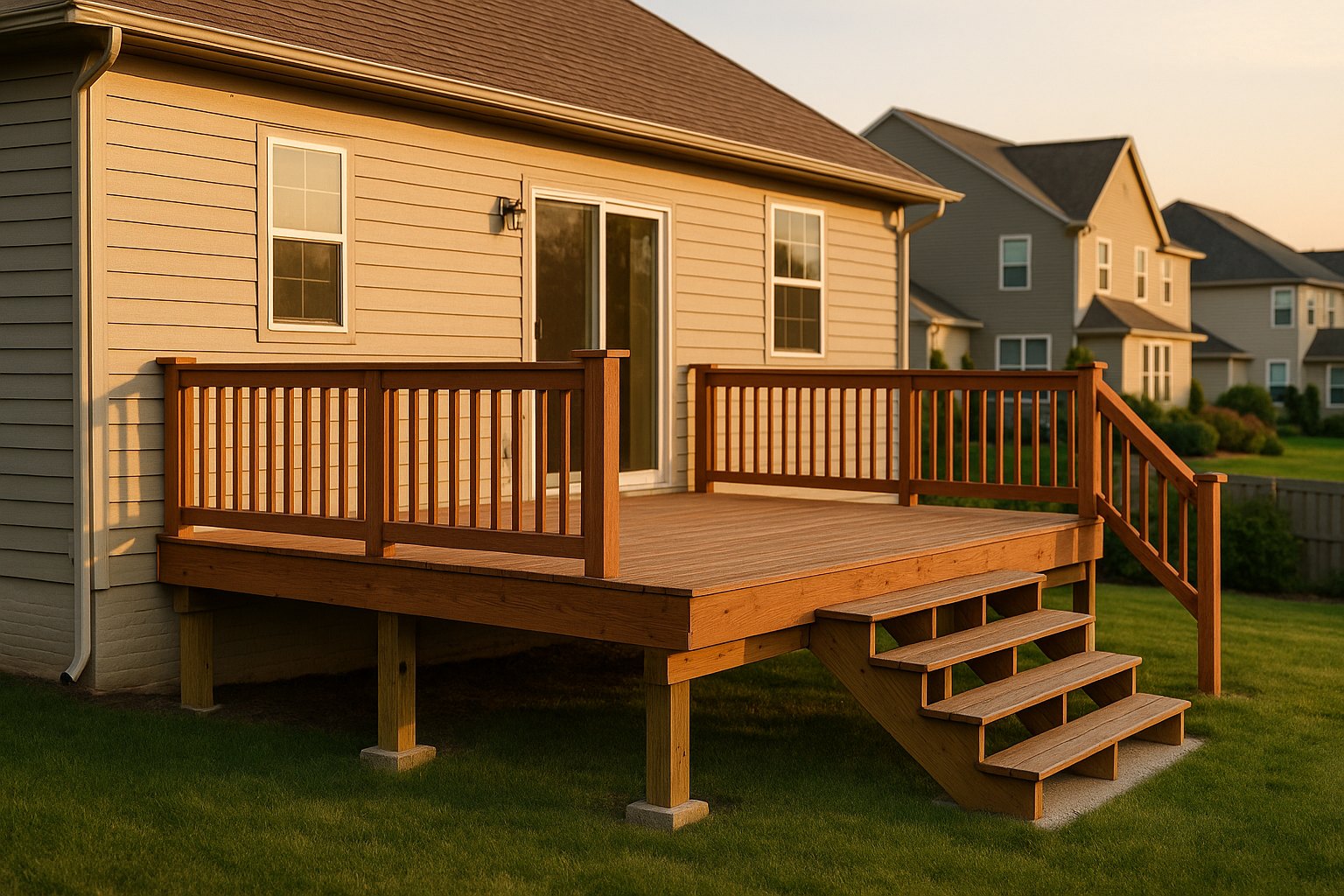
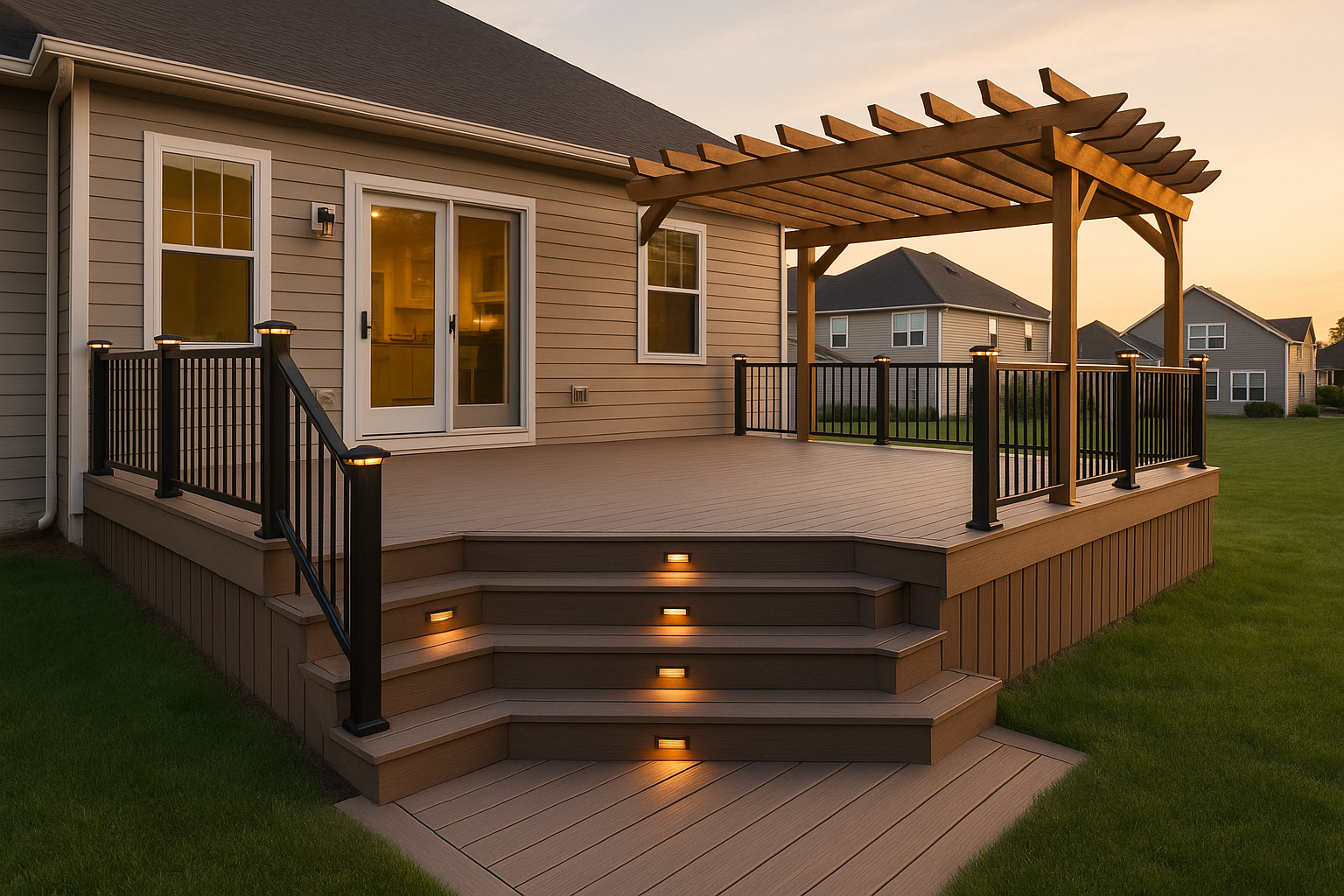
Central Indiana buyers aren’t looking for a floating party platform. They want a deck that feels like a natural extension of the house—right off the kitchen or living room, with wide stairs onto the lawn. In neighborhoods like Bridgewater or Prairie Trace, it’s all about clean lines: neutral composite boards, black metal balusters, maybe a cedar accent. And yeah, HOAs have a say. Most want drawings and material samples. (We handle that part—part of being a contractor who lives in the weeds of local code.) Things like under-deck drainage are a stealth bonus. If you’ve got a walkout basement, that dry space below can be a patio, storage, or man cave. That’s where our patio enclosure side might suggest a screen, but an open deck with a ceiling system under it often gives you the best of both worlds.
Railings Are the Handshake of Your Deck
Buyers grab a railing before they ever step onto the boards. A wobbly, builder-grade wooden rail screams “maintenance headache.” But a sturdy, dark powder-coated aluminum rail? That says “quality.” We’re railing contractors at heart—it’s a small detail that punches above its weight. Pair it with cap lights, and you’ve got that custom-home feel. If you’re picking railings, check out our thoughts on deck railing options in Brownsburg.
The Money Side: What the Numbers Say About Indiana Deck ROI
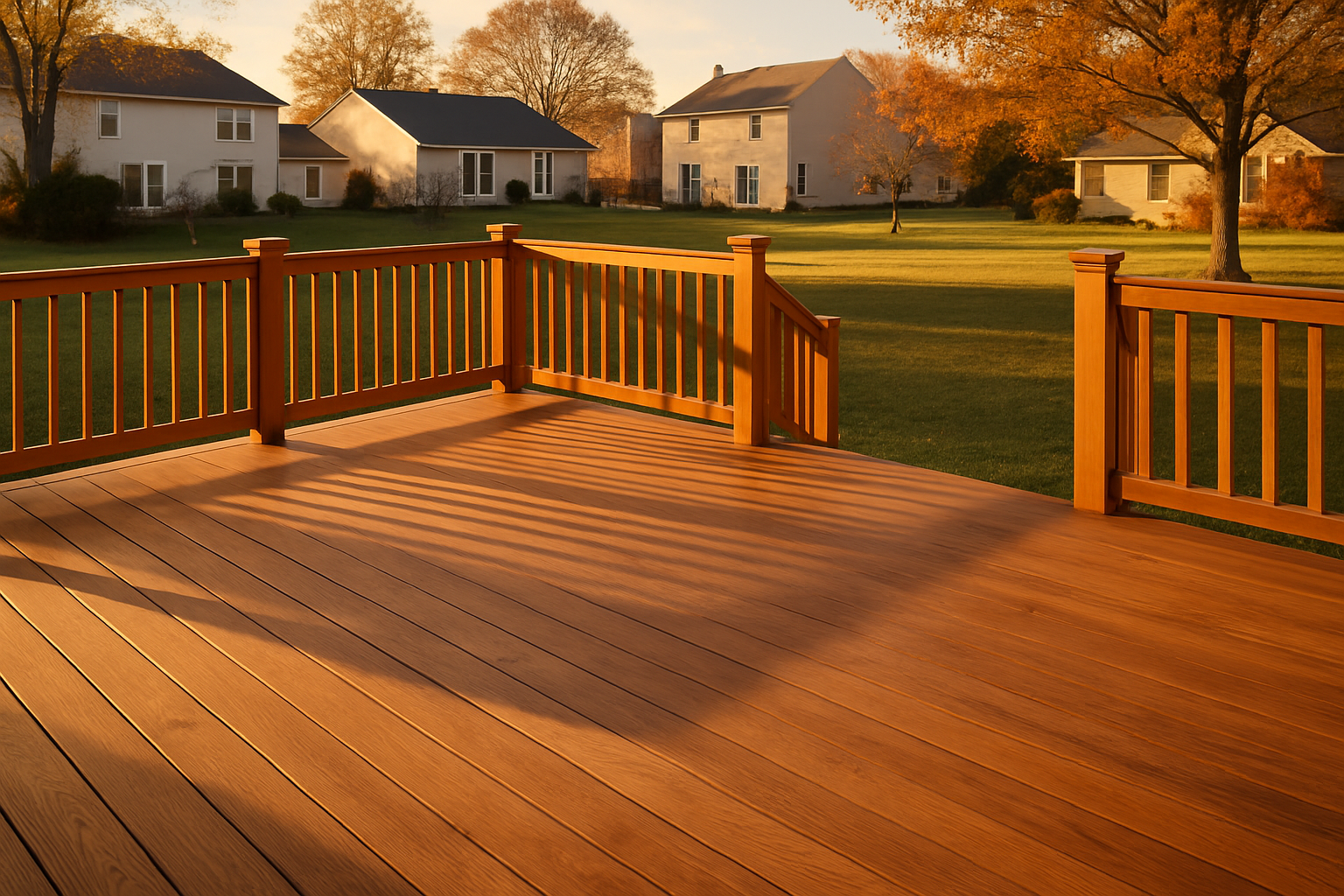
National reports say decks recoup about 50–70% of their cost at resale. In Carmel, where homes sell fast and buyers expect outdoor living, we often see the higher end of that—especially for the right materials. A basic treated-wood deck might cost $15k and add $9k in value. Composite can run $20–25k but pulls in buyers who don’t want to stain every spring. (Just ask anyone who’s spent a weekend rolling sealant while dodging Indiana sunburn.) So is composite worth it? For ROI, think about your timeline. Selling in two years? Go with pressure-treated and keep it spotless. Staying put? Composite’s low maintenance pays you back in free time—and when you do sell, it still looks brand new. See our take on cedar decks in Westfield if you’re after that warm, natural vibe.
Does Appraisal Actually Catch a Deck’s Value?
Appraisers in Hamilton County do count decks—if they’re permitted and built to code. If you skipped the building department, an appraiser might treat your deck like a fancy lawn ornament. No permit, no value. That’s where our contractor license comes in: we pull permits for every job, from Carmel to Brownsburg, because a paper trail matters. Permits are a hassle, sure, but they’re your proof the deck won’t collapse during a Super Bowl party. (More on that in our permit guide for Indianapolis decks.)
The Stuff That Destroys Deck Value
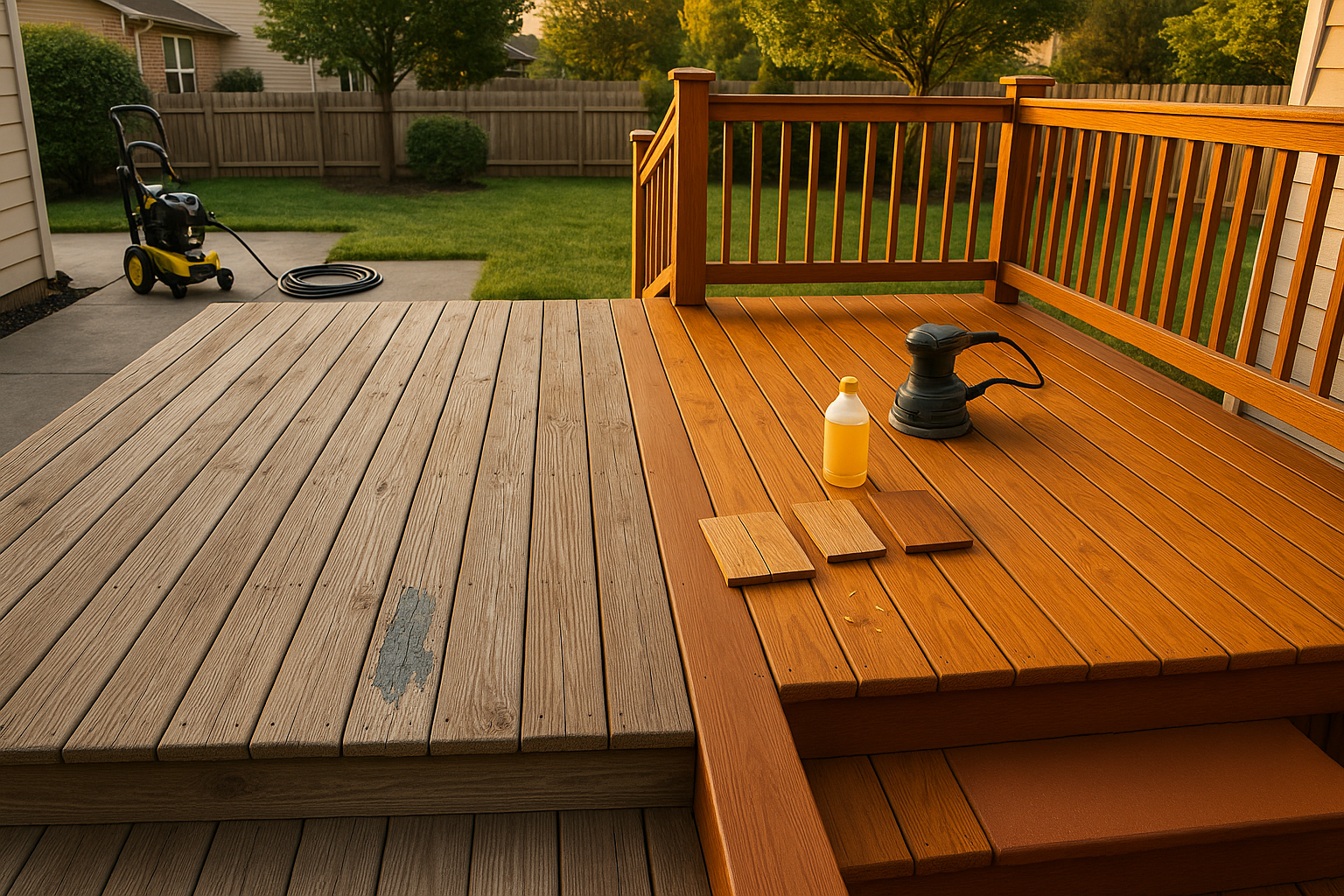
We’ve fixed enough decks in Zionsville and Noblesville to know what makes buyers walk. Oversized decks that swallow the yard? That’s a no. Shaky, crooked framing that suggests the whole thing was a weekend warrior project? Another red flag. Indiana’s freeze-thaw clay soil is rough on footings. If you don’t dig deep enough—below frost depth—your deck can heave and crack. It’s not exciting, but it’s why we pour concrete piers that go down 30+ inches. And if you try to hide rot with a fresh coat of paint, trust me, buyers’ inspectors will sniff it out. The fix? Stay on top of winter maintenance for your wood deck, or your ROI can evaporate fast.
Privacy Sells, Too
In a city like Carmel, where neighbors can be close, a well-placed privacy screen or fence can make a deck feel like a secret garden. We’re also fence contractors, so we can match your deck and fence materials so it all flows. A solid cedar screen on one side doesn’t just block the view of the neighbor’s recycling bins—it adds a cozy enclosure that buyers love.
Little Upgrades That Tip the Scales
Lighting is the easiest way to make a deck feel expensive. We’re not talking floodlights—just warm, subtle step lights that make it safe and inviting after dusk. In Greenwood, we did a deck with integrated riser lights, and the homeowner said it felt like a resort. It matters because most showings happen in the evening. Add a pergola for shade, and you’ve just made the space usable even during Indiana’s sticky afternoons. (And yes, we’ve got a whole article on pergolas in Noblesville if you’re curious.)
So, Is a Deck Worth It in Carmel?
If you build with brains—right size, good access, quality materials, proper permits—then yes. Deck return on investment home value Indiana isn’t a myth; it’s just not a guarantee. It depends on the choices you make now. Don’t overbuild for the neighborhood, but don’t go so cheap that buyers see a future project. A deck from us (shameless plug) comes with a plan-first approach: we draw it, price it, and walk you through every permit sheet. That way, you know what you’re getting into, and when it’s time to sell, you’ve got a stack of paper that proves it’s legit.
Thinking about a deck? Let’s chat—no Zillow printouts required. Fill out the form on our site for a free planning consult, and we’ll figure out what makes sense for your home and your wallet. Hit the button right here: talk to a real human about your project.
Thinking about your own deck or pergola?
Free in-home design consultation, 3D rendering, and a written quote — no pressure.